Get in touch
Learn more about how to drive better business outcomes with financial benefits that make a difference.
Thank you! Your submission has been received!
Oops! Something went wrong while submitting the form.

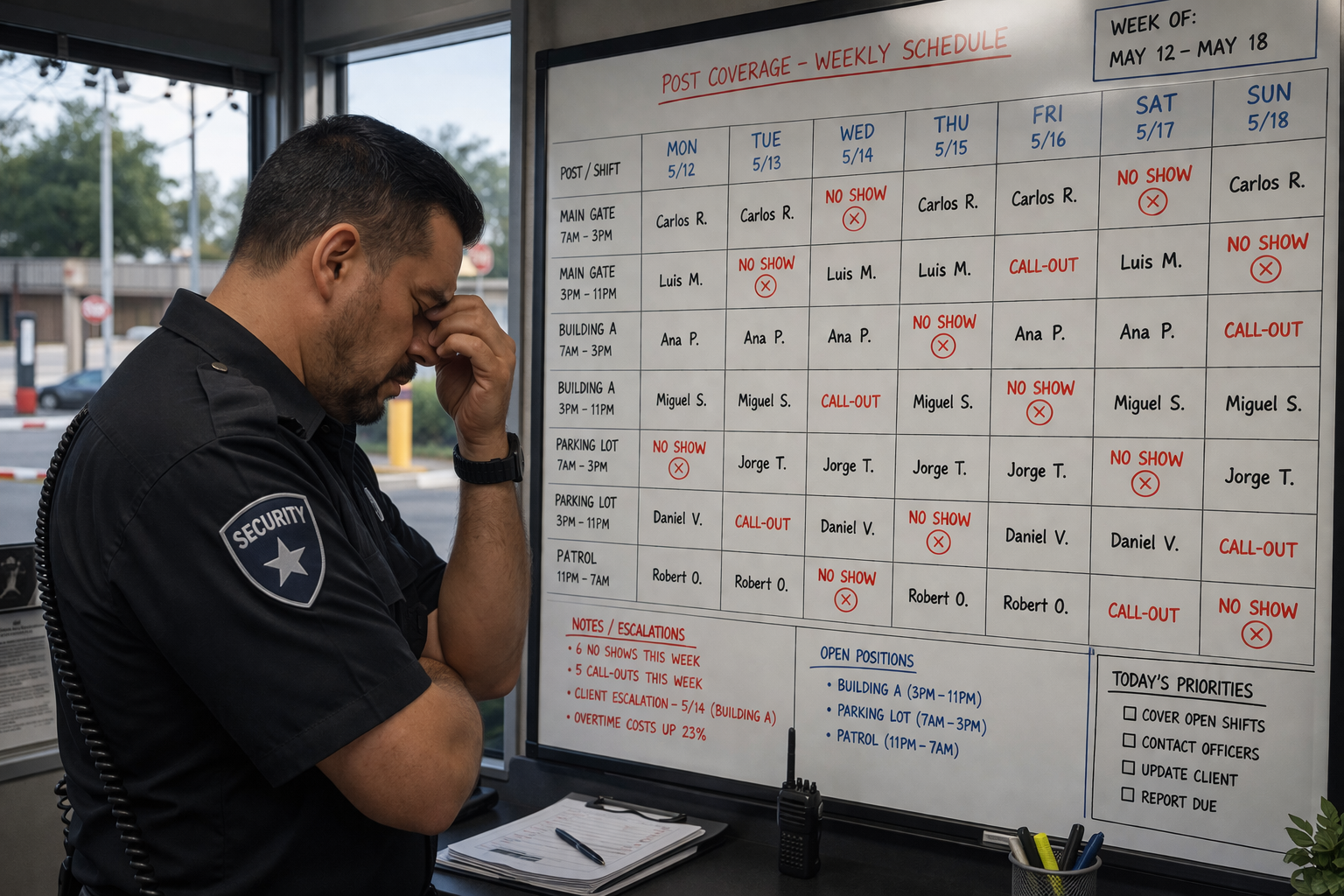
Most security companies don’t lose people at month 18. They lose them by day 60. The officer shows up, completes training, works a few weeks, and then disappears or starts missing shifts until they’re gone.
This early-tenure churn is one of the biggest drivers of coverage gaps, overtime spikes, and client escalations. And the most frustrating part is that it feels inevitable.
It isn’t.
When a new officer leaves quickly, you don’t just lose a person. You lose the entire investment:
And because new hires are the most likely to churn, the system turns into a treadmill: constant hiring, constant onboarding, and constant backfilling.
That treadmill is expensive. But more importantly, it’s destabilizing.
Some reasons are obvious:
But the early churn pattern is often driven by something more immediate: financial timing.
In the first few weeks of a job, cash matters more than almost anything. Transportation, childcare, food, and day-to-day expenses don’t wait for payday. When a new hire is living paycheck to paycheck, even a small gap can create a crisis.
That’s when “good employees” make decisions that look irrational to operators:
This is why the pay cycle can quietly work against retention, especially early on.
Most security leaders focus on training and supervision to reduce early churn. That matters. But if the officer is struggling financially between shifts, no amount of coaching fixes the root problem.
The early weeks are where pay timing pressure is at its peak:
If that pressure builds, attendance slips. Once attendance slips, coverage breaks. And once coverage breaks, the officer is on the way out.
Cobraste Earned Wage Access (EWA) gives officers access to wages they’ve already earned, when they need it.
In security operations, that matters because it removes the pay timing friction that drives early call-outs and job-hopping. When a new hire can access earned wages:
This is not about “making the job easier.” It’s about removing the financial friction that causes good people to drop out before they ever become stable, reliable officers.
Cobraste is production ready in Puerto Rico and already integrated with the leading payroll/workforce providers.
If three or more of these are true, your operation is leaking reliability in the first 60 days:
If this feels familiar, you don’t need a new recruiting strategy. You need stabilization.
Early churn creates a compounding problem: you never build a stable bench, supervisors burn out, and clients experience constant change.
Cobraste EWA is designed to stabilize the first 60 days fast. And we’ve packaged the rollout end-to-end (training, employee onboarding, and communications) so you can implement without draining your team’s time. When you’re ready to move, the path is straightforward and it moves quickly.

